All photos Jason Triefenbach and JM Kamp
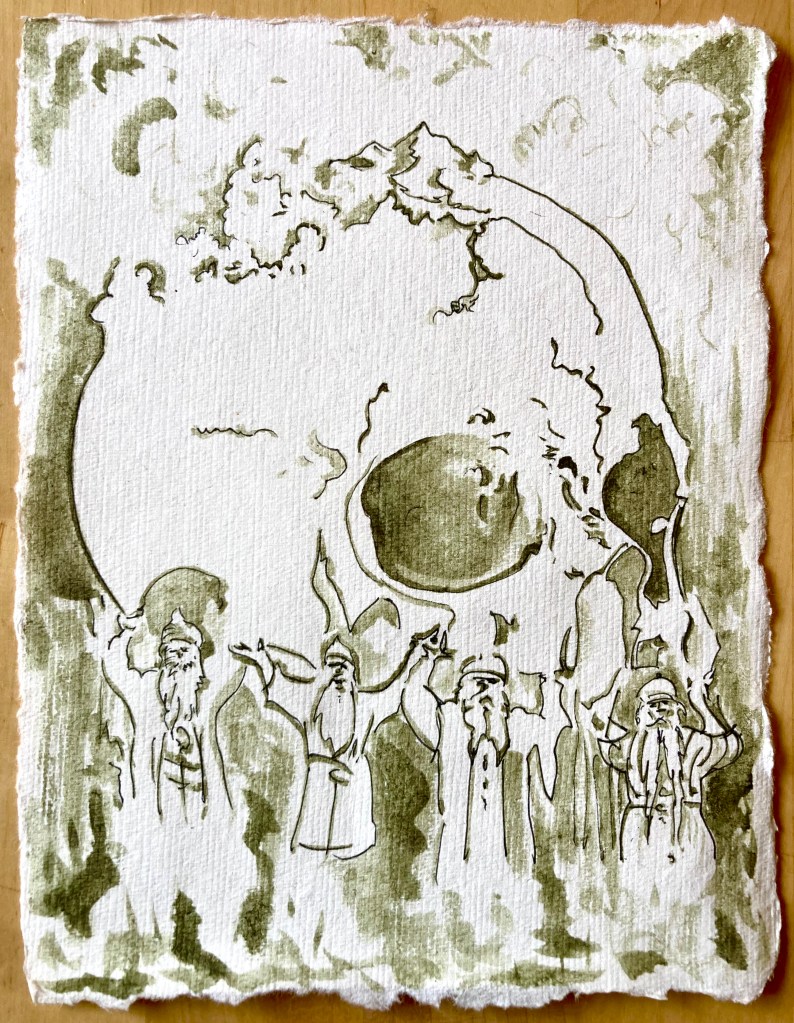
Jason Triefenbach, pen and ink on paper.
In my body
It is midnight
The spray
Of black waterfalls
Resounds
One year ago this week I had the opportunity to visit Iceland with my spouse. In addition to taking in the natural beauty of the island and the quirky culture of its people, I engaged with the spirits of the place through a very simple ritual process repeated in the various locales that we visited.
The incantation I used each time is one I composed myself, based on my secondary research in Norse mythology and my personal experience with the Four Kings of goetic magic; it is not, as far as I know, indicative of traditional Norse practices. I was however inspired in particular by the creation myths of the Nordic people, elements of which I offer below in short. (Quick note: the letter ð is pronounced like a vibrated “th-” as in “they” or “other”.)
~
Ymir, the first being; a giant of giants. And a great cow, Auðhumla, who nourished Ymir from four rivers of milk that she produced. And licking a great salty block of ice, Auðhumla revealed Buri, grandfather of Odin, Vili, and Ve – first of the gods. Eventually these brothers slew the vast and powerful Ymir, and from his corpse they fashioned the World. From Ymir’s blood came the seas and lakes of the world, and from his flesh the land. From Ymir’s hair the brothers created trees, and from his bones they fashioned the mountains. And when maggots appeared from the flesh of Ymir, Odin and his brothers used them to create the Dwarves. From Ymir’s skull they made the sky, and at the four cardinal points of the directions they placed dwarves, to hold that skull aloft until the end of time. These dwarves are called Austri, Vestri, Norðri and Suðri. (1)
~
The tale continues- the roll call of creation spreading from that first murder. Life and Death, the eternal oscillation. But these fragments were more than enough for me to work with: a Before, an After, four directions. Sacrifice, ordeal, and primeval artistry.
From this story I extracted the nature of the four directional dwarves as congruous with a common thematic element in magical practices the world over. Offering a spoken acknowledgement of East, West, North and South is an important facet of magical ritual that transcends time, place, and tradition. In my own self-taught bastardization of medieval European ceremonial magic, I have often called upon and made offerings to the so-called Four Kings: Oriens, Paymon, Egyn, and Amaymon.(2) And as in that tradition, the dwarves seem to me to represent a conjunction of the celestial and the chthonic: raised from the corpse of the giant, they stand upon the edges of the Earth yet hold in their hands the vault of the heavens.
Although I try not to practice what we could perhaps call chop-and-slop magic – carelessly mixing and matching pantheons and praxes into a synthetic colonialist idiosyncracy – I felt in this case that the similarities were profound enough to conduct minor directional evocations by supplanting some of the particular Scandinavian lore into an outline similar to that with which I call upon the Kings. Riffing off the general text below, I adapted the words a bit each time I spoke them.
“Hail to thee, Austri, great and mighty pillar of the East! Hail to thee Vestri, great and mighty pillar of the West! Hail to thee Norðri, great and mighty pillar of the North! Hail to thee Suðri, great and mighty pillar of the South! I invoke thee, noble dwarves, you who were born from the flesh of Ymir, giant of giants, primeval being first-born in all the Universe, who was fed by the four rivers of milk which did flow forth from the great cow Auðhumla, and who was slain and quartered by his descendants, the first of the gods! I call to you with gratitude and honor, you who hold aloft the dome of the sky, steadfast and strong, renowned of old. I am a traveler in this land of fire and ice – look with favor upon my offerings, reveal to me the wonders of this place, and grant me safe passage through this country!”

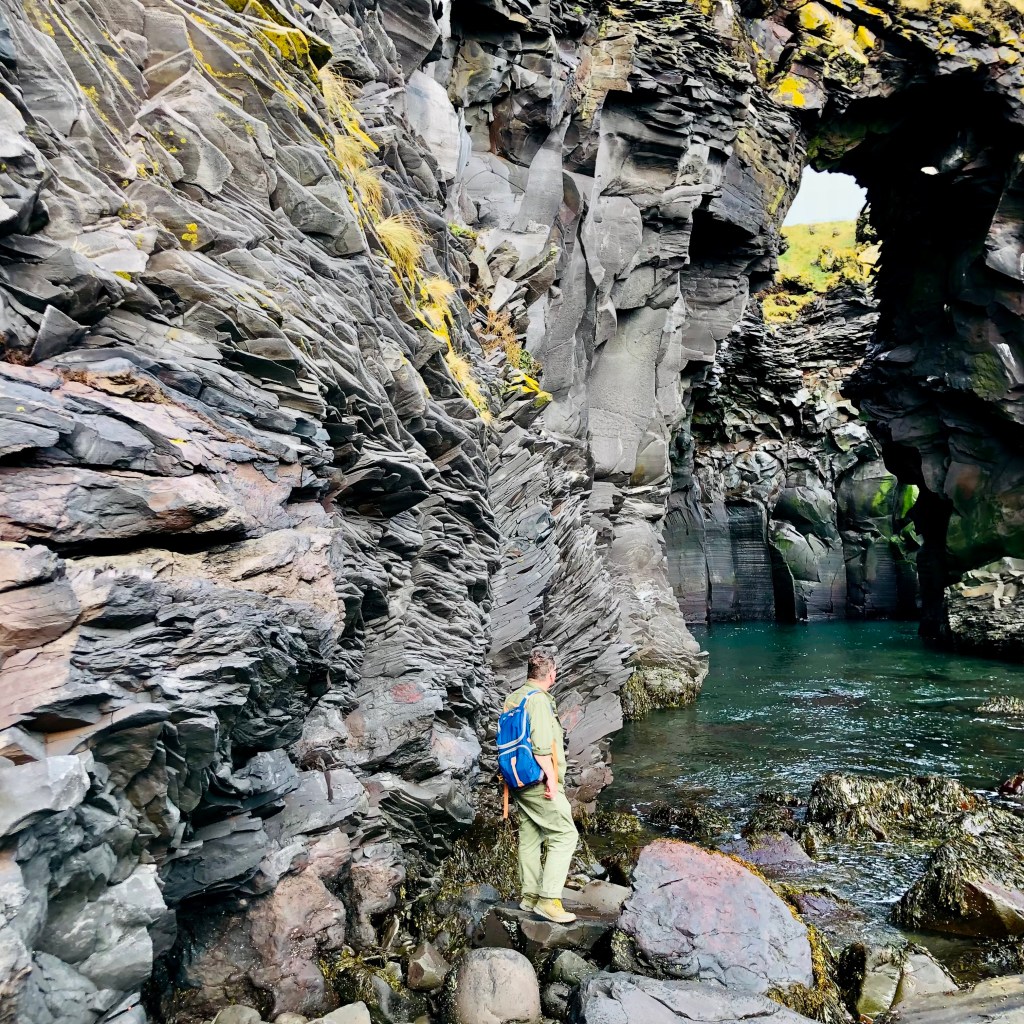
In the dazzling and rugged Múlagljúfur Canyon in East Iceland, I found a quiet mossy spot set back from the trails and performed the simple rite. Facing each direction, I called to the dwarves in turn and poured libations of Brennivín, a strong, clear liquor endemic to the island. [From the blog of ÍslandsHótel: “Brennivín (a.k.a the black death), a clear and unsweetened Icelandic schnapps with a 37.5% alcohol content, is considered the national drink of Iceland. The very name “Brennivín” translates to “burning wine,” and it is typically served cold as a shot, alongside a beer, or as a base for various cocktails. Its history is fascinating and dates back to Iceland’s prohibition.”](3)

After a few moments of meditative silence, feeling myself touched by the altitude and the sun glittering on the distant sea below, I ended by cutting a small amount of the moss upon which I stood and pocketing it for later use.
As sometimes happens during ritual, time had seemed to stretch around the dimensional bubble created by my words and deeds. Although I felt I’d only been engaged in the working for perhaps 15 minutes, I returned down the trail to find my wife a bit frantic – I’d been gone for about an hour and she was worried I’d fallen from one of the treacherous cliff edges!
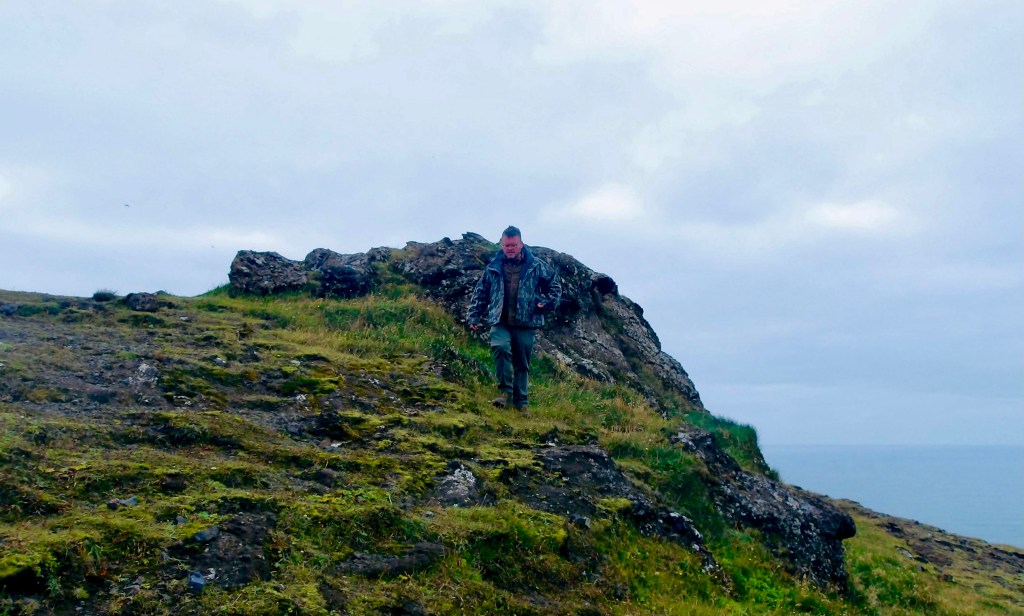
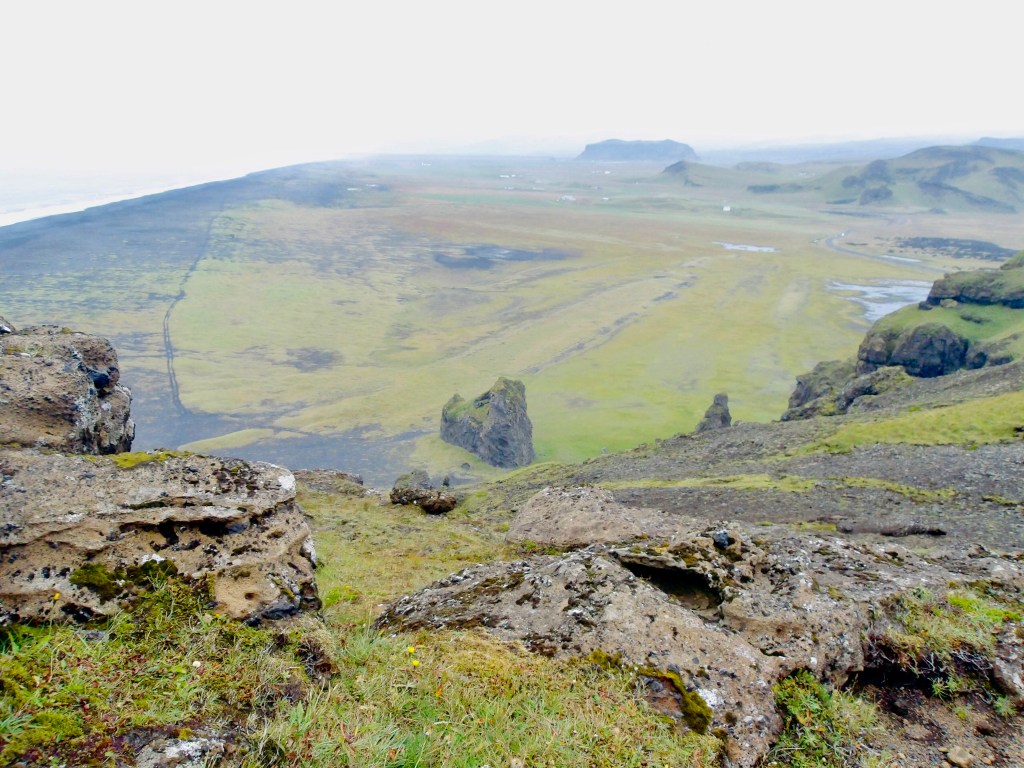
A few days later, I repeated the rite, facing into the wind at Dyrhólaey Beach – Iceland’s Southernmost point (not counting the Westman Islands.) This was yet another exhilarating opportunity to confront my fear of heights! The gorgeous undulations of moss and lava rock tower above Iceland’s iconic black sand beaches, capped by an historic lighthouse. We preferred to turn away from the other tourists and explore the slopes further inland, where I performed again my invocation and offered libation, then collected a few small sprigs of Stonecrop and Hawkbit.

We snapped some pics of the vista and pressed our cold lips together, picking up litter as we returned to our vehicle. For anyone hoping to cultivate a magical practice, my biggest suggestion, aside from meditation, is to start cleaning whatever natural spaces you enter by removing the trash you’ll surely find. Build a spiritual stockpile of empathy by atoning for the shortcomings of your species!

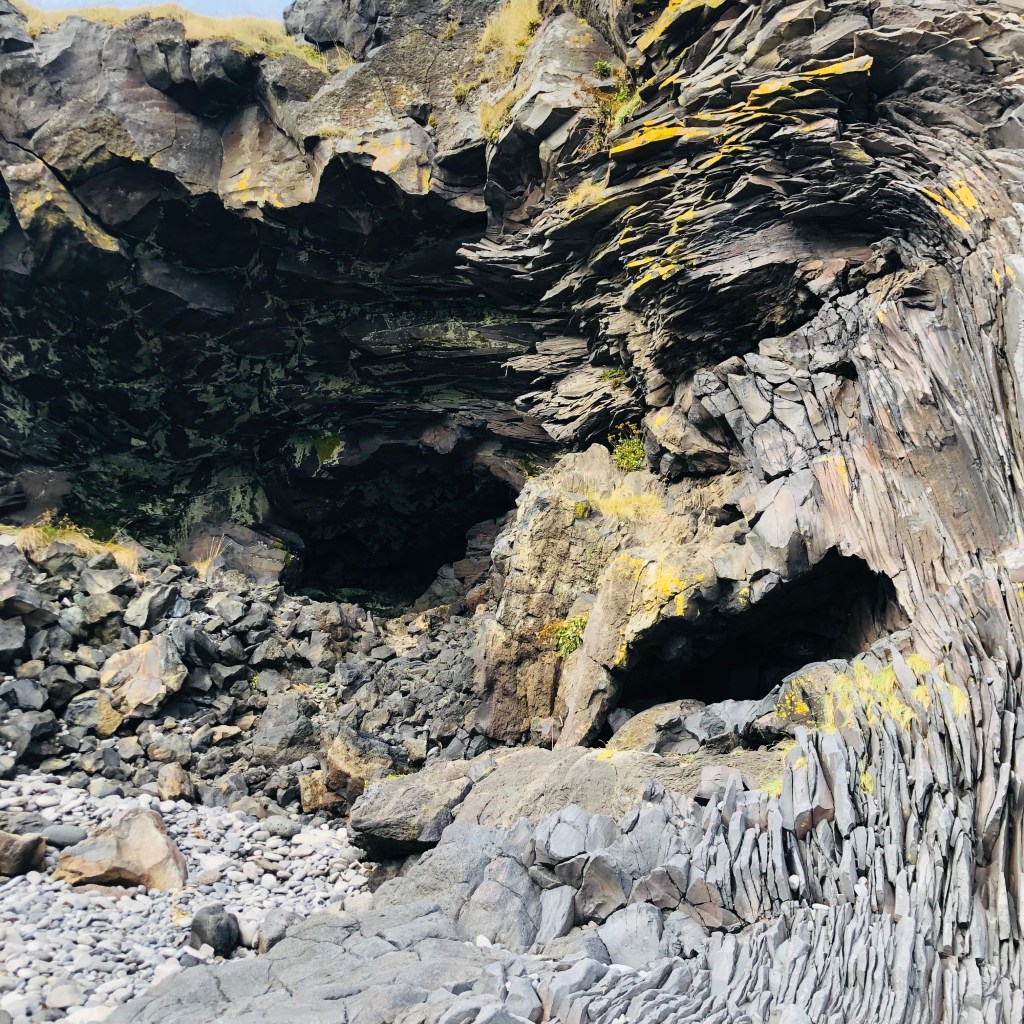
I repeated the rite once more along Iceland’s South Coast, somewhat impromptu: we came upon a site called Dverghamrar – “Dwarf Cliffs” – and of course I couldn’t pass up the opportunity to offer my thanks in this particular spot, said to be a primeval dwelling-place of the sturdy yet elusive beings!

After spending the night on a working goat farm near the town of Vik, we meandered a little ways into the island’s interior, soaking in a hot pool and eating tomato ice cream before emerging finally upon the Snæfellsnes Peninsula- both the furthest West and furthest North we traveled in Iceland.
The weather here was stormy, with more rain and fog than elsewhere during our visit. This suited me fine; I love a reprieve from the oven of summer!
From our guesthouse near the town of Borgarnes, we headed to Búðakirkja: this gorgeous black church is one of the most photographed sites in all of Iceland. Perhaps due to the weather, crowds were thankfully sparse as we walked the ancient crisscrossing footpaths through tall grass and volcanic sand.

I’d read about a witches’ workshop near the church and we did indeed find the place but it was uninhabited and in disarray. Another local told us they’d closed shop during the pandemic, but “they’re still in the area, somewhere.”
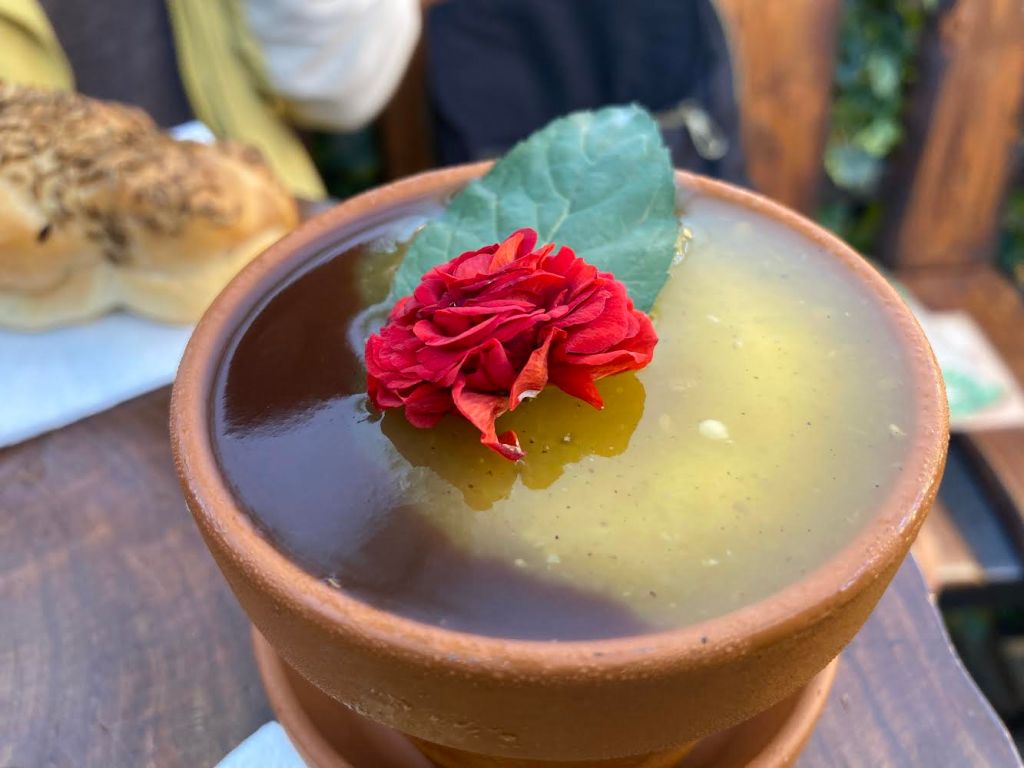
From Búðir we continued west toward a lunch of fish soup and sweet rye bread at a small cafe in a stone cottage overlooking the shoreline.

After shots of a smooth Icelandic gin, we drove on past ruins of old farmhouses to the very tip of the peninsula, where I once again invoked the four pillars of the sky.

Here I cut a small sprig of Crowberry and then we turned back toward our lodging, each mile a constant reminder of the land’s flow from deep underground out into the sea.
I repeated the invocation the next morning in a field outside our guesthouse, collecting some tall, mesmerizing green grass as the cold wind pelted me with rain.
Our next stop was the capital city of Reykjavik for two more nights. All cities are to some extent similar, and rather than search for a quiet spot to work my magic, I relaxed and let myself be carried along by the holiday experience.

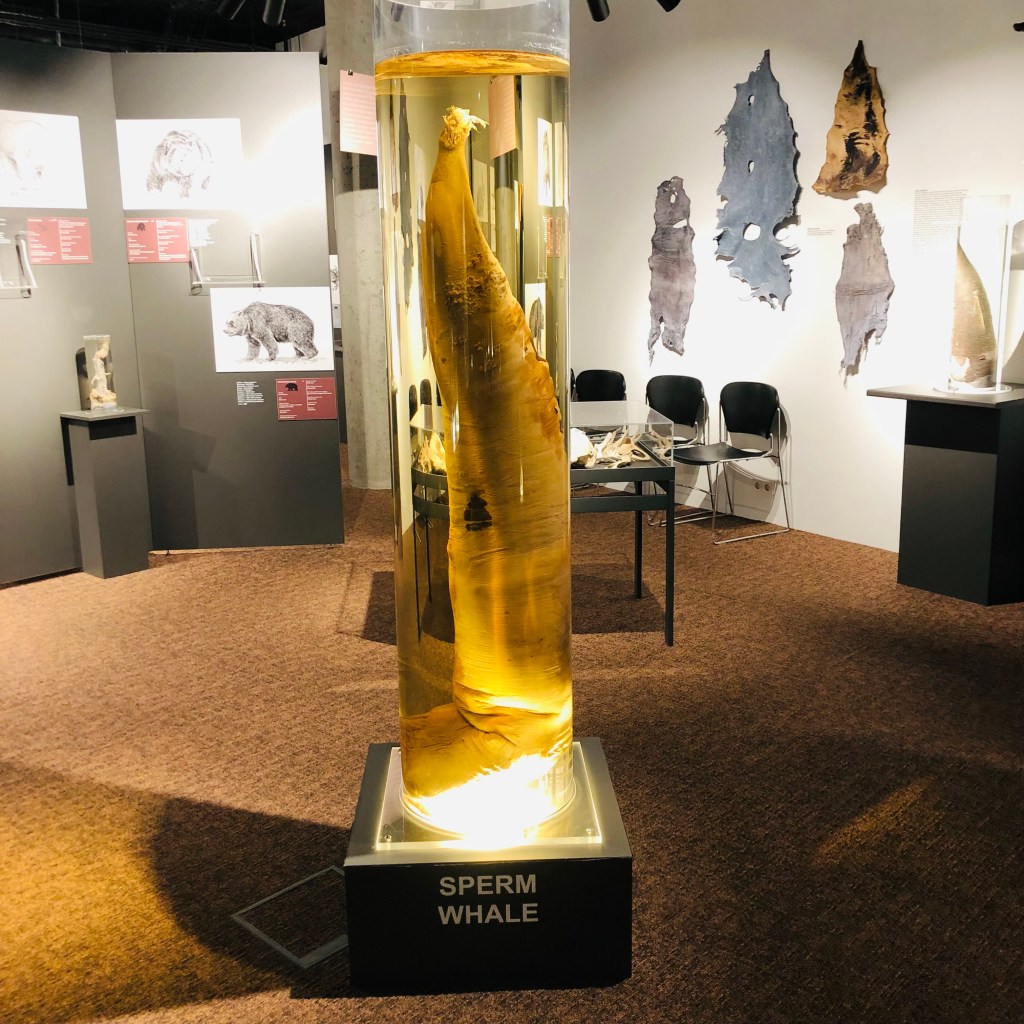
Two sites worth mentioning are The Icelandic Phallological Museum, where we viewed specimens of both the largest and the smallest penii in the world (and plenty in between!) and the Sagas Museum, which featured compelling, macabre, and sometimes hilarious waxwork dioramas of Viking history.
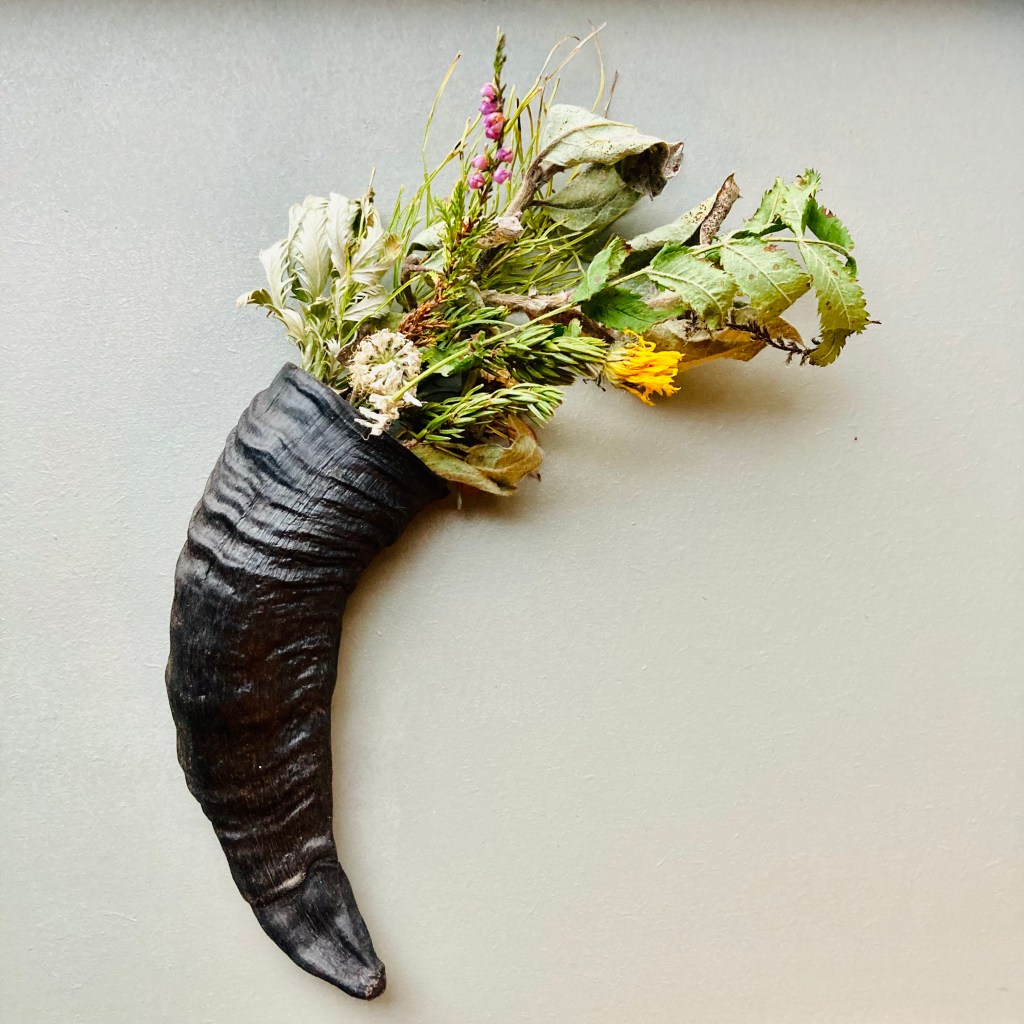
On our final morning in Iceland I found a suitable site to perform my final ritual of the trip. Pulling off the highway on our way to the airport, I again performed the call to the dwarves, but embellished it this time with offerings not only of the Brennivin, but of bread and milk as well. I poured the milk in a rough cross upon the expanse of lava rock, then placed a necklace of volcanic beads in the center and compelled the dwarves to bless and consecrate it as a magical implement. I’d been saving the plant matter in a goat’s horn, leaving it to dry on the dashboard of our rental car throughout the week. I lit this aflame, gesturing and fumigating the site and the necklace before pouring the ashes onto the ground. Over all this I poured out the remainder of the liquor to ensure the flames were extinguished, and then thanked the spirits for their wonderful hospitality.
With a bittersweet intensity, we prepared to return home.
I had no goals with these workings other than that of a respectful guest: to show my appreciation to the spirits of the landscape and to feel a deeper connection to place. In gathering small amounts of plant life, in pouring libation and offering song and sacred dance, I attempted to make the acquaintance of the elements and the guardians of the the hills, clouds, coastlines and eruptions of the Icelandic landscape. Although I had intended to continue communing with the dwarves upon my return to the States, that goal very quickly receded into the background as more local concerns became paramount once again.
I’m reminded, a year out, that although “every mountain is the holy mountain,” (4) travel grants us the precious opportunity to particularize the universal. In adapting our habits and ideas to a new place, to new names for old urges, we are able to pass through the skein of our personality and find fresh routes inward, to a deeper understanding of that which is truly important to us.
Until we meet again,
Jason Triefenbach, HFHR, MSG
Source list:
(1) EDDA, Snori Sturluson, composed early 1200s. Trans. and Ed. by Anthony Faulkes, University of Birmingham. Orion Publishing Group, 1987.
(2) https://theappendix.net/posts/2014/01/the-key-of-hell-a-sorcery-manual-from-the-enlightenment
(3) https://www.islandshotel.is/explore-iceland/blog/guide-to-10-of-icelands-finest-drinks/
(4) As far as I can tell, this is an unattributed aphorism. Know the source? Let us know in the comments!


Leave a Reply